Personal Brand Content Creation: The Complete Guide

Personal brand content creation means regularly sharing your knowledge, story, and point of view on social media so the right people get to know, like, and trust you. To do it well, you pick a clear message, choose three to four content pillars, film short videos on a steady schedule, and guide viewers toward working with you. A strong personal brand social media presence turns you from "one more option" into the person people want to hire.
This matters because people buy from people. If you are a founder, coach, agent, consultant, or local expert, your face and voice can win more trust in 30 seconds than a polished logo ever will. The problem is that most owners do not have the time, the plan, or the confidence to show up consistently, so this guide gives you a simple system to follow.
Key Takeaways
- A personal brand is what people think of when they hear your name, and social media is the fastest way to shape it.
- Start with a clear message: who you help, what problem you solve, and what makes your view different.
- Use three to four content pillars so you never run out of ideas and your content stays focused.
- Short-form video is the most effective format for building a personal brand online right now.
- A batch filming system lets you create a month of content without burning out.
- Every piece of content should move people one step closer to working with you.
What Is a Personal Brand, and Why Does It Matter for Business?
Your personal brand is the reputation people connect to you as a person, separate from your company logo. It is your expertise, your values, your story, and how you make people feel.
Why people follow people, not pages
Business pages often struggle to get attention because people go on social media to connect with humans. When you share your face, your voice, and your opinions, viewers feel like they know you. That feeling of familiarity is what turns a stranger into a client.
What a personal brand can do for your business
- Build trust faster: People see you teach and help before they ever talk to you.
- Lower your cost of getting customers: Warm leads from content often need less selling.
- Let you charge more: Known experts can price on value, not just on cost.
- Open doors: Speaking invites, partnerships, and referrals often come from visibility.
- Last beyond one company: Your audience follows you, even if your business changes.
Step 1: Define Your Personal Brand Message
Before you film anything, get clear on what you want to be known for. A fuzzy message leads to random content and confused viewers.
Answer these four questions
- Who do you help? Be specific. "Small business owners in Las Vegas who want more local customers" is clearer than "business owners."
- What problem do you solve? Name the pain your audience feels, like no time, no leads, or wasted ad spend.
- What result do you help them get? Describe the outcome in plain words.
- Why you? Your story, your experience, or your unique way of doing things.
Write a one-line brand statement
Combine your answers into one sentence. Here is a simple template:
"I help [who] get [result] without [pain], using [your approach]."
For example: "I help home service owners get booked jobs from social media without spending hours making content." Use this line in your bio, your intro videos, and as a filter for every content idea.
Step 2: Choose Your Content Pillars
Content pillars are the three or four main topics you talk about again and again. They keep your content focused and make idea planning much easier.
Four pillars that work for most personal brands
- Teach: Tips, how-tos, and answers to common questions in your field. This builds authority.
- Story: Your journey, lessons learned, wins, and failures. This builds connection.
- Opinion: Your take on industry myths, trends, and common advice. This sets you apart.
- Proof: Client wins (with permission), behind the scenes of your work, and results. This builds belief.
How to balance your pillars
A good starting mix is roughly 40 percent teaching, 25 percent story, 20 percent opinion, and 15 percent proof. Adjust based on what your audience responds to. If you want a big list of ideas for each pillar, read our guide to personal brand content ideas.
Step 3: Pick the Right Platforms
You do not need to be everywhere. You need to be where your future clients spend their time, and you need to show up there consistently.
Quick platform guide
- Instagram: Great for local businesses, coaches, creators, and service providers. Reels help you reach new people, and Stories help you build a relationship with followers.
- TikTok: Strong for reaching new audiences fast, especially with educational and story-driven content.
- LinkedIn: Best for B2B founders, consultants, and professionals selling to other businesses.
- YouTube Shorts: Good for search-driven topics and building a library that keeps getting found.
- Facebook: Still useful for local audiences and older demographics.
Start with one main platform and one secondary platform. You can repurpose the same short videos across several of them with small changes to captions.
Step 4: Build a Content Creation System
Content creation for personal brand growth only works if you can keep it up. The secret is not motivation. It is a simple, repeatable system.
The monthly content workflow
- Plan (1 to 2 hours): Brainstorm 12 to 20 ideas across your pillars. Pull from customer questions, recent conversations, and things you wish people knew.
- Script (2 to 3 hours): Write a short outline for each video: a hook, three key points, and a call to action.
- Film (half a day to a full day): Batch film everything in one session. Change outfits or locations to add variety.
- Edit (ongoing): Add captions, trim pauses, and keep pacing tight.
- Post (weekly): Schedule posts on set days so you stay consistent.
- Engage (daily): Reply to comments and DMs, and comment on other people's posts in your space.
- Review (monthly): Look at what performed best and plan more of it.
This is exactly why we film a month of content in one shoot day for our clients. Batching removes the daily pressure and keeps your content consistent even when you are busy.
A simple script formula
Use this structure for most of your videos:
- Hook (first 3 seconds): Call out a problem or make a bold claim. "Most business owners waste money on ads for this one reason."
- Value (20 to 40 seconds): Give two or three clear points or a quick story.
- Call to action (last 5 seconds): Tell people what to do next. "Comment 'plan' and I will send you my checklist."
The hook is the most important part. Our guide on how to write a hook for short-form video has dozens of examples you can adapt.
Step 5: Film Content That Looks and Sounds Good
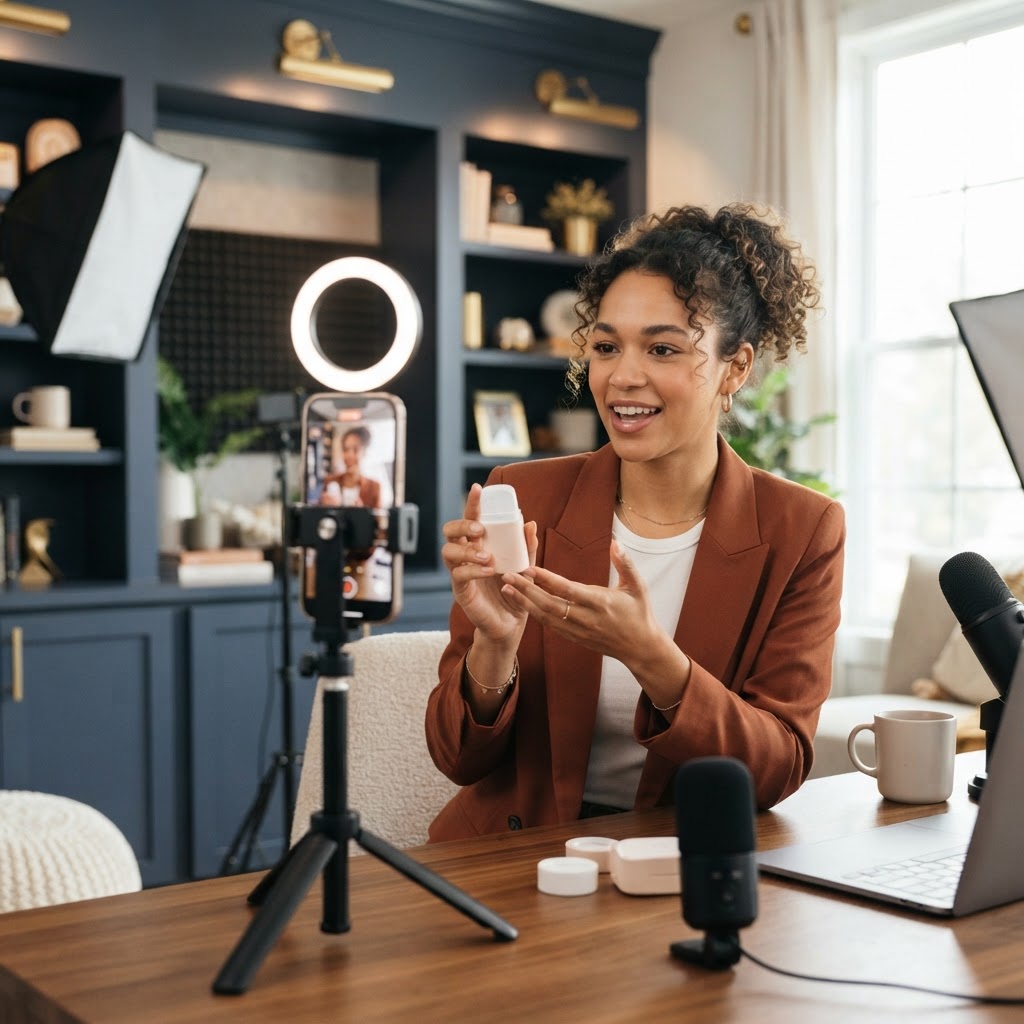
You do not need expensive gear to build a personal brand online. You do need clear sound, good light, and a steady shot.
A simple setup checklist
- Light: Face a window during the day, or use one soft light in front of you.
- Sound: A small clip-on or wireless mic makes a huge difference. Bad audio makes people scroll faster than bad video.
- Camera: A recent smartphone is plenty. Use the back camera when possible for better quality.
- Framing: Keep your face in the top third of the frame, with a bit of space above your head.
- Background: Clean and simple, ideally something that hints at what you do.
Getting comfortable on camera
Many owners avoid personal brand content because they feel awkward on camera. That is normal, and it gets better with practice. Talk to the camera like you are explaining something to one client across the table. Do a few warm-up takes before your real ones, and remember that viewers care more about useful content than perfect delivery.
For more help, read our guide on how to be confident on camera.
Step 6: Post Consistently and Engage
Consistency is what turns occasional viewers into followers and followers into clients.
How often to post
For most personal brands, three to five short videos a week on your main platform is a strong target. If that feels like too much, start with three and build up. A schedule you can keep beats an ambitious one you abandon.
How to engage the right way
- Reply to every comment in the first hour after posting when you can.
- Answer DMs quickly, since fast replies turn curiosity into conversations.
- Leave thoughtful comments on posts from others in your industry and your ideal clients.
- Use Stories to share everyday moments, polls, and behind-the-scenes looks.
Engagement is not extra work on top of content. It is part of building a personal brand social media presence that actually leads to business.
Step 7: Turn Your Audience Into Clients
Views and followers are nice, but the goal is business. Here is how to connect your content to revenue without sounding pushy.
Add clear calls to action
Every few posts, tell people how to take the next step. Examples:
- "Comment 'guide' and I will send it to you."
- "DM me the word 'start' if you want help with this."
- "Book a free call through the link in my bio."
Set up a simple path
- Content gets attention.
- A call to action starts a conversation in DMs or comments.
- A quick reply or automated DM shares a helpful resource or a booking link.
- A call or consultation turns the lead into a client.
Use proof the right way
Share client wins and testimonials with permission, and focus on the problem they had and how life changed. Real stories are far more convincing than claims about yourself.
Common Personal Brand Mistakes to Avoid
- Trying to appeal to everyone. A clear niche attracts the right people faster.
- Only posting about your business. Mix in stories and opinions so people connect with you as a person.
- Copying other creators word for word. Use trends and formats, but make the message yours.
- Posting without a call to action. If you never invite people to work with you, many never will.
- Chasing perfection. Done and helpful beats perfect and never posted.
- Quitting too early. Personal brands grow over months, not days. Commit to at least 90 days.
- Ignoring comments and DMs. Engagement is where relationships and sales start.
How to Measure Your Personal Brand Social Media Growth
Track a few simple numbers each month so you know what is working:
- Reach and views: Is your content reaching new people?
- Follower growth: Is your audience growing steadily?
- Engagement: Are people commenting, sharing, and saving?
- Inbound messages: Are people reaching out with questions or interest?
- Clients from social: How many new clients mention your content?
Review these numbers once a month, double down on the topics that drive messages and clients, and cut what does not.
Frequently Asked Questions
How do I build a personal brand online from scratch?
Start by defining who you help and what problem you solve. Then choose three or four content pillars, pick one main platform, and post short videos on a consistent schedule. Engage with your audience daily and add clear calls to action so followers can become clients.
What is the best platform for personal brand social media?
It depends on your audience. Instagram works well for local businesses and service providers, TikTok is strong for reaching new people quickly, and LinkedIn is best for B2B professionals. Start with the one platform where your ideal clients spend the most time.
How often should I post to grow my personal brand?
Three to five short videos a week on your main platform is a strong goal for most people. If that feels like too much, start with three and focus on consistency. Batch filming makes a steady schedule much easier to keep.
What should I post for content creation for a personal brand?
Rotate between teaching tips, sharing your story, giving your opinion on industry topics, and showing proof like client wins or behind-the-scenes work. This mix builds authority, connection, and trust. Pull ideas from the questions your clients ask you most.
Do I need expensive equipment to build a personal brand?
No. A recent smartphone, a small microphone, and good natural light are enough for most people. Clear audio and a clear message matter far more than expensive gear.
How long does it take to build a personal brand?
Most people see early engagement within the first month of consistent posting and meaningful growth within three to six months. Turning a personal brand into a steady source of clients often takes six to twelve months. Consistency is the biggest factor.
Let Us Build Your Personal Brand Content for You
Building a personal brand social media presence takes a clear message, a steady system, and content that looks and sounds professional. If you want the results without spending your nights scripting and editing, our team can handle it. At Social Content Masters, we script, film, edit, and post your content, often capturing a full month of videos in one shoot day. Explore our services to see how it works.
Book a free content strategy session and we will help you map out your message, your content pillars, and a plan to turn your personal brand into a source of new clients.
Want content like this made for your brand?
We script, film, edit, and post. You get your time back.
Book a Consultation