How to Write a Hook for Short-Form Video (With 50 Examples)
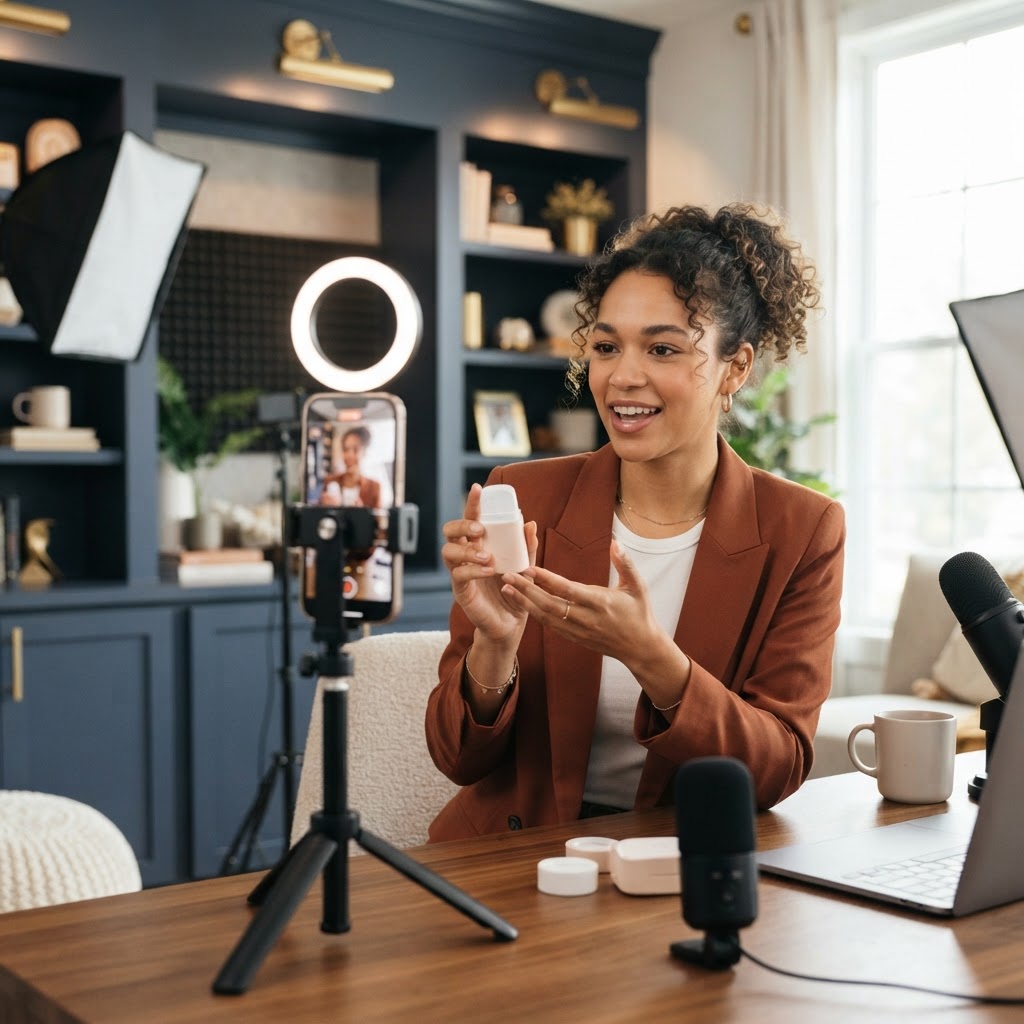
A hook is the first line, image, or moment of your video, and its only job is to make the viewer stop scrolling and keep watching. To write one, name a specific problem or desire your customer has, add curiosity or tension, and say it in the first one to three seconds while showing something on screen that matches. The best video hooks are short, specific, and make a promise the rest of the video keeps.
Why does this matter so much? On Reels and TikTok, people decide in a moment whether your video is worth their time. If your opening is weak, it does not matter how helpful the rest is, because nobody sees it. A better hook is often the fastest way to get more views without spending more on ads or posting more often.
Key Takeaways
- The hook is the first one to three seconds. It includes what you say, what you show, and the text on screen.
- Strong video hooks speak to one specific person with one specific problem or goal.
- Curiosity, a bold claim, a mistake, a result, or a story are the five most reliable hook styles.
- Your hook must match your video. Clickbait that the video does not deliver on hurts trust and watch time.
- Write three to five hook options for every video and pick the strongest. Test different hooks on similar content.
- Use the 50 examples below as fill-in-the-blank templates for your business.
What Is a Hook in Short-Form Video?
A hook is the opening of your video that earns the next few seconds. Think of it like a headline in a newspaper or the subject line of an email. People do not read every article or open every email. They pick the ones whose first line grabs them.
On short-form platforms, your hook has three layers working at the same time:
- The spoken hook: the first sentence you say.
- The visual hook: what is on screen in the first frame (movement, a surprising object, your face mid-action, a before shot).
- The text hook: words on screen at the top or middle of the video. Many people scroll with the sound off, so this is often what they read first.
The strongest openings line up all three. You say "Stop doing this to your lawn," you are holding a lawn spreader, and the screen says "Lawn mistake costing you money." Three signals, one message.
Why the First 3 Seconds Decide Everything
Platforms like Instagram and TikTok pay close attention to how long people watch your video and whether they swipe away early. If lots of viewers leave in the first few seconds, the app usually shows your video to fewer people. If they stay, it tends to show it to more.
That is why you hear so much about the "first 3 seconds." It is not a magic number, but it is a useful reminder: your opening has to work almost instantly. You do not have time for "Hey guys, welcome back, today I want to talk about..." By the time you finish that sentence, many viewers are gone.
For business owners, this has a direct money impact. A video that keeps people watching reaches more local customers, gets more profile visits, and creates more chances for someone to call, book, or DM you. If you want more views without posting more often, start with your hooks. For more fixes, see our list of ways to get more views on Instagram Reels.
The Simple Formula for Writing Video Hooks
You do not need to be a copywriter. Use this four-part formula:
- Who: call out the person you want to reach. ("Gym owners," "If you just bought a house," "Women over 40.")
- What: name the specific problem, desire, or mistake. ("Losing members in January," "Your AC bill doubled," "Dry winter skin.")
- Tension: add curiosity, urgency, or surprise. ("Here is why," "Nobody tells you this," "Before you call a plumber.")
- Payoff: hint at what they get if they keep watching. ("The fix takes 2 minutes," "3 things to check first.")
You will not always use all four. A great hook might only use two. But checking your hook against this list helps you spot when it is too vague.
Before and after example
- Weak hook: "Today I want to talk about skincare."
- Stronger hook: "If your skin feels tight after washing, your cleanser might be the problem."
The second version calls out a specific person (people with tight skin), names a problem, and creates curiosity (the cleanser?). It also hints at a fix.
The 5 Hook Types That Work Best for Businesses
Most strong hooks fall into one of five styles. Rotate between them so your content does not feel repetitive.
- Curiosity hooks open a question the viewer wants answered.
- Bold claim or contrarian hooks say something that challenges what people believe.
- Mistake or warning hooks point out a costly error the viewer might be making.
- Result or proof hooks lead with a transformation, a before and after, or a finished result.
- Story hooks drop the viewer into the middle of a moment.
50 Video Hook Examples You Can Copy
Below are 10 examples of each hook type, written as fill-in-the-blank templates. Swap in your service, customer, and city.
10 Curiosity Hooks
- "Here is what nobody tells you about [your service]."
- "I almost did not share this, but [customer type] need to hear it."
- "The real reason your [problem] keeps coming back."
- "Why do [industry] professionals never [common customer habit]?"
- "This one question tells me everything about a new client."
- "What happens when you [action] for 30 days?"
- "Most people in [city] have no idea this exists."
- "There is a reason we always [unusual habit] before [task]."
- "Watch what happens when we [process step]."
- "I get asked this every single week, so here is the answer."
10 Bold Claim and Contrarian Hooks
- "You do not need [expensive thing] to [result]."
- "Stop [common advice]. Do this instead."
- "Unpopular opinion: [common belief] is costing you money."
- "[Popular trend] is the worst thing you can do for your [thing]."
- "The cheapest [service] is usually the most expensive one."
- "I would never [common action] as a [your profession]."
- "Everything you were told about [topic] is outdated."
- "You are cleaning your [item] wrong."
- "This is the only [product or habit] I recommend to every client."
- "If your [professional] does this, find a new one."
10 Mistake and Warning Hooks
- "3 mistakes that are killing your [result]."
- "Before you hire a [service provider], watch this."
- "Do not sign a [contract type] until you check these 3 things."
- "If you are doing this to your [item], stop right now."
- "The biggest mistake I see new [customer type] make."
- "This small habit is quietly ruining your [thing]."
- "Never say this to a [professional] if you want a good deal."
- "Red flag: if your [service provider] says this, run."
- "You are probably wasting money on [common expense]."
- "Do this before [season or event] or you will regret it."
10 Result and Proof Hooks
- "From this to this in [time frame]."
- "This is what [budget level] gets you in [city]."
- "Watch this [room, car, lawn, smile] transform."
- "The before is rough. Wait for the after."
- "Our client came in with [problem]. Here is how they left."
- "This is the exact [routine or process] we use for every client."
- "Here is what [number] years of doing [job] taught me in 30 seconds."
- "One change. Look at the difference."
- "Rating every [product or option] we have tried so you do not have to."
- "Here is a full [service] start to finish."
10 Story Hooks
- "A client walked in last week and said something I will never forget."
- "I almost quit my business in year one. Here is what changed."
- "This was the worst job we have ever shown up to."
- "Nobody believed this would work."
- "So this happened at the shop today."
- "I made a mistake with a client once, and it changed how we do everything."
- "The day I realized my pricing was wrong."
- "Here is why I started [business name]."
- "Our first customer is still with us. Here is why."
- "Three years ago I was [old situation]. Today I [current situation]."
That makes 50 hook templates you can start using today. Save them, adapt them to your industry, and keep a running list of the ones that perform best.
How to Make Your Hook Work Visually
A great spoken line can still fail if the first frame is boring. Here are ways to make your visual hook as strong as your words.
- Start mid-action. Begin the video with your hands already working, the door already opening, or the product already in motion.
- Show the result first. Open on the finished kitchen, the clean car, or the plated dish, then explain how you got there.
- Use a pattern interrupt. Something slightly unexpected in frame, like an odd prop, a fast zoom, or a quick movement toward the camera, makes people pause.
- Get close. Close-up shots feel more urgent than wide shots in the first second.
- Put bold text on screen. Keep it to a few words, high contrast, and place it where captions and app buttons will not cover it.
- Cut the warm-up. Trim any breath, "um," or pause before your first word. The video should start the instant it starts.
Good lighting and clear sound also help your hook land, because people judge quality instantly. If your setup needs work, our guide on filming professional videos with your iPhone covers the basics.
How to Write Hooks for Your Specific Business
Generic hooks get generic results. The best reels hooks for your business come from your customers' actual words. Here is how to find them:
- List the 10 questions customers ask you most. Each one is a ready-made hook. "How long does a roof last?" becomes "Here is how long your roof actually lasts."
- List the 5 biggest objections you hear. "It is too expensive" becomes "Why the cheapest quote usually costs more."
- List the mistakes you fix every week. These become warning hooks.
- List your best before and after results. These become proof hooks.
- Write down moments that surprised you. These become story hooks.
Spend 20 minutes on this list and you will have enough hook ideas for months of content.
Hook examples by industry
- Real estate: "Do not buy a house in [city] until you check this."
- Med spa: "What [treatment] actually feels like, honestly."
- Contractor: "This is why your contractor quote looks so different from mine."
- Dentist: "Your dentist can tell if you do this every night."
- Restaurant: "We make [signature dish] from scratch every morning. Here is how."
- Law firm: "Three things to never say after a car accident."
- Gym: "If you only have 20 minutes, do this workout."
How to Test and Improve Your Hooks
Even professionals cannot predict which hook will win every time. That is why testing matters.
- Write three to five hook options for each video before you film. Pick the strongest, or film two versions.
- Reuse a strong video with a new hook. Repost a helpful video a few weeks later with a different opening and compare results.
- Watch your retention. Instagram and TikTok both show how long people watch in your insights or analytics. If many people leave in the first few seconds, the hook is the likely issue.
- Compare similar videos. Look at your top 10 and bottom 10 videos. What do the openings of the winners have in common?
- Keep a hook swipe file. Save hooks that stop you while scrolling, from any industry. Adapt the structure, not the exact words.
Also remember that length and pacing work together with your hook. A strong opening on a video that drags will still lose people. Our guide on how long Reels and TikToks should be helps you match length to your goal.
Common Hook Mistakes to Avoid
- Starting with a greeting. "Hi, I am Sarah from..." wastes your most valuable seconds. Introduce yourself later, or let your bio do it.
- Being too broad. "Tips for better health" speaks to nobody. "If your back hurts after sitting all day" speaks to someone.
- Clickbait that does not deliver. If your hook promises something the video does not give, people feel tricked and leave. Over time it can hurt trust and results.
- Burying the point. If your best line is at second 15, move it to second one.
- Too many words on screen. A long paragraph of text in the first frame is hard to read in time. Aim for a short, punchy phrase.
- Hook does not match the visual. Saying "Look at this transformation" while showing your face, not the transformation, breaks the promise.
- Using the same hook style every time. Rotate between curiosity, bold claims, mistakes, results, and stories.
Frequently Asked Questions
What is a good hook for a reel?
A good reels hook calls out a specific viewer, names a problem or desire they care about, and creates curiosity in one short sentence. It should be said in the first one to three seconds and matched by something interesting on screen. "If your AC is blowing warm air, check this before you call anyone" is a good example.
How long should a video hook be?
Most strong video hooks are one sentence, often under 10 to 12 words, and delivered in the first one to three seconds. The goal is to grab attention quickly and then move straight into the value. If your hook needs a second sentence to make sense, it is probably too complicated.
What are some good TikTok hook ideas for a small business?
Some reliable TikTok hook ideas include showing a before and after, calling out a common mistake, answering a question customers ask every week, and sharing a short behind-the-scenes story. Templates like "Before you hire a [service], watch this" or "Here is what [budget] gets you in [city]" work well for local businesses. Use the 50 examples above as a starting point.
Why do the first 3 seconds of a video matter so much?
The first 3 seconds are when most viewers decide whether to keep watching or scroll away. Platforms watch that behavior closely, and videos that lose people early usually get shown to fewer people. A strong opening gives your message a chance to be seen.
Should I use the same hook in the text and voiceover?
They do not need to be word for word, but they should deliver the same message. Many people watch with sound off, so on-screen text often carries the hook for them. Using slightly different words in text and voice can actually reinforce the idea.
Can I reuse viral hooks from other creators?
You can borrow the structure of a hook, like "Stop doing X, do Y instead," and adapt it to your business. Avoid copying someone's exact words or content. Your hook should always connect to your real expertise and what your video actually delivers.
Let Our Team Write Your Hooks for You
Writing great video hooks takes practice, and most owners do not have time to write, test, and rewrite openings every week. At Social Content Masters, our team has 100+ content frameworks we use to script, film, edit, and post short-form video for businesses, and every script starts with the hook.
If you want a month of scripted, hook-first content filmed in one shoot day, take a look at our Social Content Package or book a free content strategy session and we will show you how it would work for your business.
Want content like this made for your brand?
We script, film, edit, and post. You get your time back.
Book a Consultation